
In Duy Xuyen, not far from the old quarter of Hoi An, there is a village whose name has long been tied to a single fabric: Ma Chau. For hundreds of years, the people here have grown mulberries, raised silkworms, reeled silk and woven it into soft, cool cloth. A visit to Ma Chau shows you how many hands a single thread passes through before it becomes the scarf on your shoulders.
A weaving village on the Thu Bon floodplain
Ma Chau lies in Nam Phuoc, Duy Xuyen, on land enriched by the silt of the Thu Bon River. The riverside flats suit mulberry trees, so sericulture took root here early; many sources date the craft back to around the 16th century.
When Hoi An was still a bustling trading port, merchant ships from Japan, China and later Europe sailed to the Quang region, and silk was one of the most sought-after goods. Duy Xuyen silk traveled far on those voyages. Local folklore still tells the story of Doan Quy Phi, a woman from Chiem Son honored as the Queen of Silkworms and Mulberries (Bà chúa Tằm Tang) for encouraging the trade.
From mulberry leaf to silk thread
According to people in the trade, a handmade length of silk goes through around twenty steps. You can picture it in four main stages:
- Growing mulberries: mulberry leaves are the silkworm's main food, so the fields must be kept lush all year round.
- Raising silkworms: the worms eat leaves almost day and night, molt four times, then spin their cocoons over a few days.
- Reeling silk: cocoons go into hot water to soften the gum, and the reeler finds the loose end, joins the filaments of several cocoons together and winds them onto a reel. Each cocoon is a single unbroken thread hundreds of meters long.
- Finishing, dyeing and weaving: the thread is cleaned, dried and dyed, then goes onto the loom to become cloth.
The result is a light, soft fabric that feels cool on the skin and takes color beautifully. It also takes so much work that handmade silk can never be as cheap as industrial fabric.
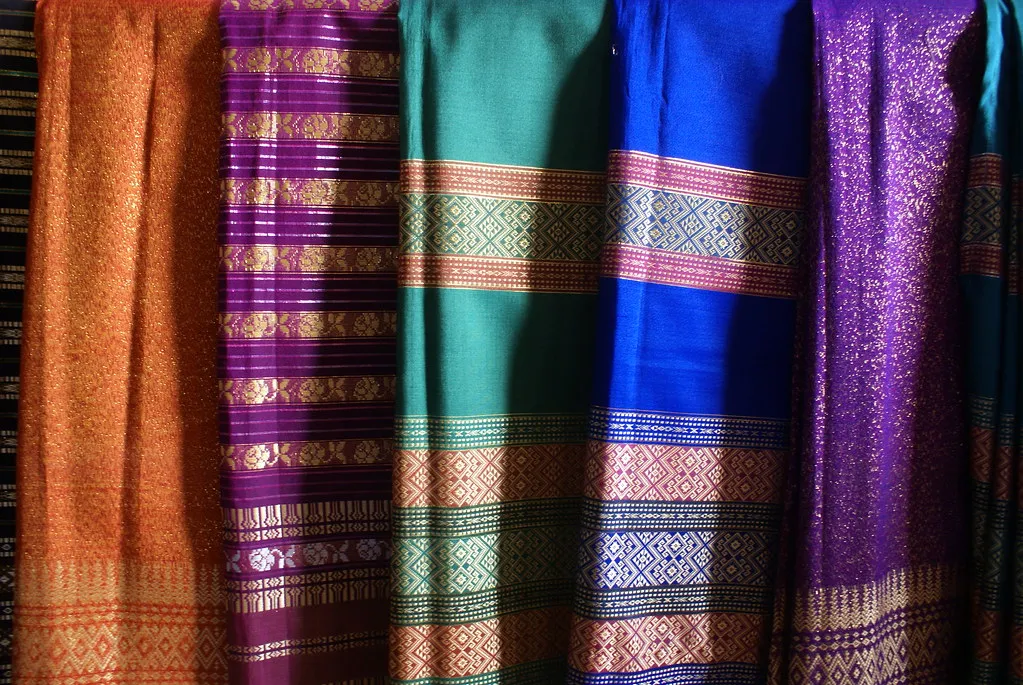
Ma Chau silk today: keeping the craft alive by reinventing it
There was a time when the clatter of looms filled the whole village, but the craft declined sharply as mulberry land shrank, cheap industrial silk flooded the market and many young people left for work elsewhere.
In recent years, a number of workshops and cooperatives in the village have been trying to revive the trade: partnering with farmers in neighboring communes to grow mulberries and raise silkworms; opening their doors so visitors can follow the process from silkworm to loom; and dyeing with natural colors from almond leaves, guava leaves, coconut husks, pagoda tree flowers and even fresh green tea buds. Ma Chau silk has also found its way onto fashion runways through a number of designers. For a tea house like Nhà An, the idea of tea buds lending color to a piece of silk feels close to home.
How to visit in a way that truly supports the craft
A craft village thrives when people understand and value what it makes. A few simple ways to make your visit count:
- Go during daytime working hours, ask before photographing the weavers and looms, and never touch threads stretched on the loom.
- Buy directly at the workshop: even a scarf, a tie or a small pouch brings the weavers more orders.
- Feel free to ask about where the thread comes from, how it was dyed and how to care for it, so you understand what you are taking home.
- Spot real silk: a strand of silk burns slowly, smells like burning hair and leaves ash that crumbles when pinched; synthetic fiber shrinks into a hard bead and smells like plastic.
- Bargain gently, because the price of handmade silk reflects dozens of steps and many days of work.
- When you share photos, tag the village name, Ma Chau, so more people learn about the craft.
Silk, áo dài and Nhà An Duy Xuyen
Nhà An Duy Xuyen is a garden house beside the Thu Bon River, on the road from Hoi An up to the My Son sanctuary. When it opens, the branch is planned to have a Ma Chau Silk Corner displaying handwoven silk, where you can photograph yourself in a silk áo dài (traditional Vietnamese long dress) amid the countryside, then sit down with garden ginger tea and a country-style vegetarian meal.
Read moreSee the Nhà An Duy Xuyen branchIf you have a full day in Duy Xuyen, you could head up to My Son at first light while it is still cool, stop by Ma Chau in the afternoon to watch silk being woven, then end the day on the Thu Bon riverbank for sunset.